

The phrase «happy ending» is widely used and loaded with meaning. For many, it refers to a sexual release provided at the end of a massage; for others, it’s shorthand for a range of intimate services offered outside conventional spa treatments. Because the term sits at the intersection of commerce, law, and personal ethics, its associated costs are not just numbers — they reflect local markets, legal risks, and the real human consequences of how services are offered and obtained.
This article walks through what influences price, typical regional ranges, the legal and safety landscape, etiquette and tipping norms, and practical alternatives that avoid illegal or risky situations. Read on to get a clearer picture without sensationalism or judgement, and with an emphasis on safety and legality.
What people mean by «happy ending» and why cost varies
Language matters. In many informal conversations, «happy ending» denotes a massage that concludes with sexual contact or stimulation. The specifics vary wildly: what one person calls a “happy ending” might be illegal or consensual depending on local laws and the people involved. Because the term itself is colloquial, any discussion about cost has to start with that ambiguity.
Price variation comes from multiple sources. In places where the activity is illegal, transactions are covert, which drives up cost due to risk premiums. In regions where regulated sex work exists, services tend to be more transparent and prices more stable. Venue type — from a licensed spa to a private appointment — also changes the price, as does the reputation and experience of the provider.
Factors that influence price
If you’re trying to understand why two quotes differ by a large margin, these are the common driving factors. Each affects the economics of supply and demand as well as the perceived risk for both client and provider.
- Location: Urban centers with higher costs of living and greater demand will typically show higher prices than rural areas.
- Legal environment: Where services are explicitly illegal, providers and clients often factor in a “risk premium.” Where regulated, there may be set fees and transparent rates.
- Venue and presentation: A membership-based wellness center or high-end spa charges more than a casual parlour, even for comparable time blocks.
- Time and duration: Longer sessions and after-hours appointments usually cost more. Travel time or house calls add fees.
- Discretion and privacy: Additional fees sometimes cover discreet booking, private rooms, or anonymity measures.
- Experience and demand: Highly requested therapists or practitioners can command higher rates — this is true in any service industry.
- Tipping and gratuities: Tipping conventions vary and can be a substantial portion of what a provider earns.
Understanding these elements clarifies that “happy ending cost” isn’t a fixed sum but a product of many interacting variables.
Typical price ranges by region
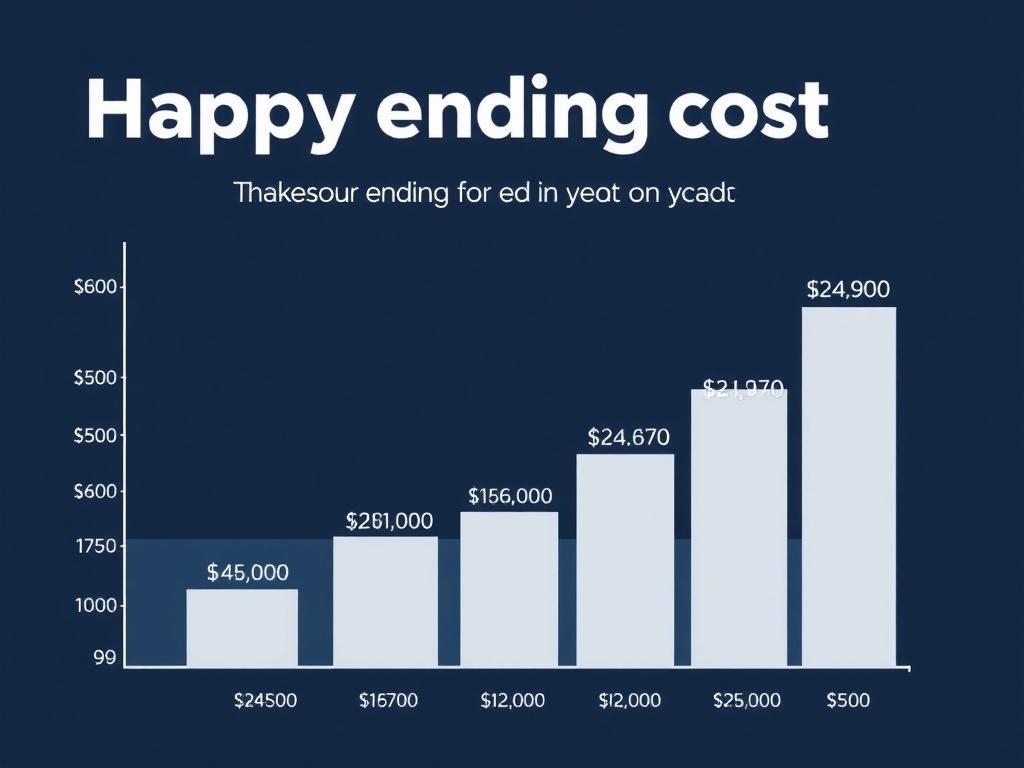
Providing precise numbers is difficult because of legal differences and the informal nature of many transactions. The table below gives very rough ranges for context only, not a price list to be used for procurement. Use it to compare scale rather than exact rates.
| Region | Typical Range (USD) | Notes on Legality and Market |
|---|---|---|
| Large U.S. cities (e.g., NYC, LA) | $100–$300+ | Often illegal; prices reflect discretion, location, and premium for anonymity. |
| Smaller U.S. metro areas | $50–$200 | Lower overhead, but legal risks remain. Prices vary widely. |
| Western Europe (regulated regions) | $80–$250 | Where regulated, transparent pricing and safer working conditions are more common. |
| Southeast Asia (varied) | $10–$100 | Huge variation: tourist areas often have higher prices; legality differs by country. |
| Other regions | Varies widely | Local laws and norms determine both availability and cost. |
Remember: low price can mean exploitation, and very high price can reflect either legitimate luxury services or extra-risk premiums. Context matters far more than the number itself.
Legal and safety considerations
Cost cannot be separated from legality. In many jurisdictions, sexual services exchanged for money — including so-called “happy endings” — are illegal and can carry criminal penalties for providers and clients alike. Laws differ not only by country, but by state, province, or municipality, and enforcement priorities shift over time.
Beyond criminal law, there are serious safety concerns. Unregulated environments can expose people to sexual health risks, coercion, or trafficking. If a provider is working under duress, pricing and consent are not genuine. Clients should be aware that engaging with services in ambiguous or illegal contexts can contribute to unsafe labor practices.
Public health is another angle. Sexually transmitted infection (STI) risks exist whenever sexual contact occurs, and in many informal settings there are few protections for either party. Seeking services through regulated providers, where available, reduces—but does not eliminate—risk.
How to evaluate risk and find legitimate services
If your goal is a therapeutic, legal, and ethical experience, focus on licensed establishments and clear boundaries. Search for accredited spas, licensed massage therapists, and establishments with transparent business practices. Licensing boards and consumer-review platforms often list credentialed providers.
Avoid anything that centers on secrecy or pressures you to pay “off the books.” Red flags include refusal to provide credentials, insistence on cash-only transactions without a receipt, and pressure to accept activities that feel coercive or unsafe. If a service seems hush-hush or the pricing structure is opaque, that opacity is itself a risk factor.
When in doubt, choose alternatives that are unambiguously legitimate: licensed therapeutic massage, couples’ spa experiences, or relationship-focused services such as licensed sex therapists and counselors. These options prioritize consent, safety, and legal clarity.
Etiquette, tipping, and negotiation

Tipping and behavior expectations differ across cultures and venues. In legitimate spas, tipping is typically for the therapist’s time and expertise and follows posted policies. Respectful behavior, punctuality, and hygiene are baseline expectations. Providers deserve clear boundaries and consent just as any professional does.
- Respect posted rules and do not solicit sexual services in a licensed therapeutic setting.
- If a provider offers additional services that might be illegal, decline and leave; engaging increases risk for both parties.
- When tipping for legitimate services, follow local norms or the establishment’s guidance; tipping should reward service, not be used to coerce additional activity.
- If you feel pressured or unsafe, end the appointment and, if necessary, report the situation to the venue or local authorities.
Negotiating the scope of any service should be done openly, lawfully, and with clear consent. If something isn’t legal where you live, negotiation won’t make it safe or lawful.
Alternatives to seeking a «happy ending»
If your interest is intimacy, stress relief, or a connection with a partner, there are constructive alternatives that avoid legal and ethical pitfalls. Couples’ massages at licensed spas can be sensual without crossing legal lines, providing a shared, relaxing experience. Workshops on tantra, massage for couples, and intimacy coaching teach techniques within ethical frameworks.
When sexual services are sought to address relationship issues or sexual dissatisfaction, licensed sex therapists and counselors offer evidence-based help. These professionals help with communication, desire discrepancies, and intimacy-building exercises in ways that respect consent, safety, and law.
Finally, self-directed education — books, instructional classes, or medically informed resources — can be empowering. Learning skills to enhance mutual pleasure with a consenting partner is both legal and constructive, and it strengthens relationships rather than relying on transactional encounters.
Practical tips for safer decisions
Make decisions informed by local law and by clear ethical standards. Verify credentials where possible, insist on transparent pricing, and avoid settings that prioritize secrecy. If you’re unsure about local regulations, consult government or health department resources rather than relying on hearsay.
Keep in mind that the cheapest option is not necessarily the safest, and the most expensive option is not necessarily the most ethical. Value services where consent, safety, and worker autonomy are visible and verifiable. That’s the best way to ensure that money exchanges hands without causing harm.
Conclusion
Talking about happy ending cost requires more than number-crunching; it demands attention to law, labor conditions, health, and basic human dignity. Prices are shaped by location, legal status, venue type, and risk, but the most important considerations are safety and consent: choose licensed, transparent services or lawful alternatives, and avoid situations that trade discretion for danger or exploitation.